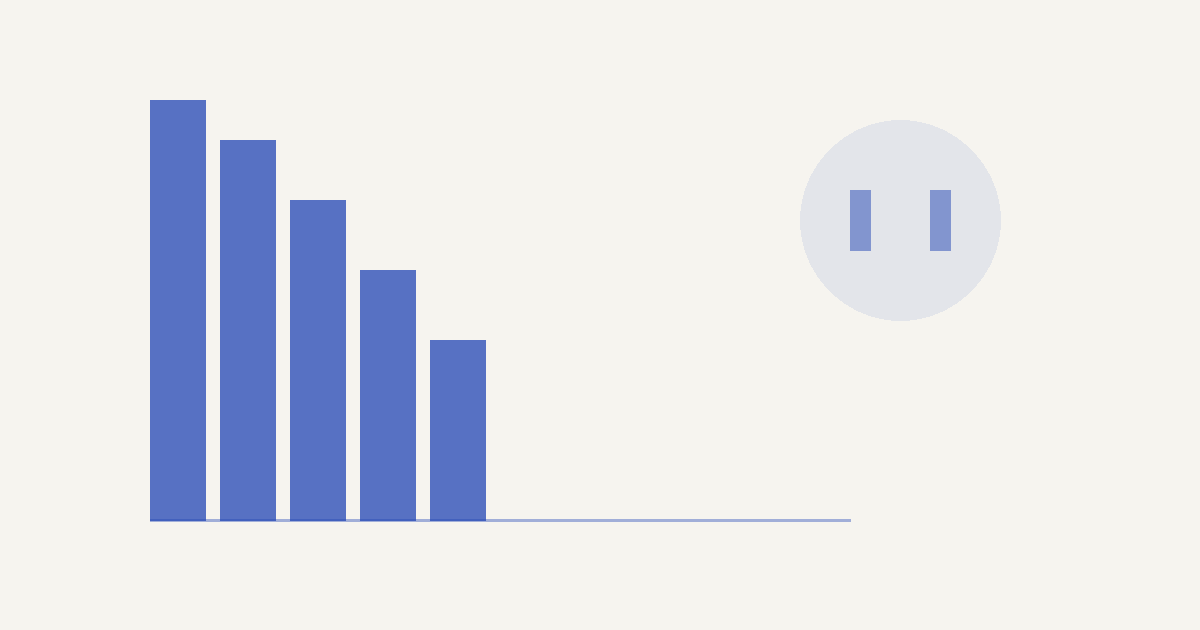
Enrollment in computer and information science programs at U.S. four-year universities dropped 8.1% in the 2025-2026 school year, the steepest decline of any field of study, with computer science specifically down 11.2%, according to National Student Clearinghouse data reported by Built In. For a field that spent over a decade as the default “safe” major, that is a striking reversal, and it is not happening for one simple reason.
The entry-level fear, specific to this field
Roughly 30% of code at major tech companies is now AI-generated, and AI tools now handle boilerplate code and basic debugging faster than most junior developers. This connects directly to the broader pattern we covered in the entry-level jobs fear: students are not imagining the shrinking junior-developer market, a Computing Research Association survey of 130 universities found 62% of participating institutions already reporting employer concern about this shift. What is specific to computer science is that the discipline’s own entry point, writing basic code, is the exact task AI has gotten disproportionately good at first.
“Cognitive surrender”: a term from MIT itself
In August 2026, an MIT faculty committee reported that its own students reach for AI at the first hint of struggle, and named the pattern cognitive surrender. This is not an outside critique of student behavior, it is one of the world’s leading technical institutions naming a problem in its own classrooms. The concern is specific: computer science, more than most fields, is learned by struggling through a bug or a broken proof, and that struggle is precisely what a fast, capable AI assistant removes if a student reaches for it too early.
What the newest international data shows
The OECD’s PISA 2025 results, released in September 2026, put a number on this. Across OECD countries, 46% of 15-year-olds use AI chatbots at least weekly for schoolwork. But students who used AI for specific tasks like summarizing or drafting scored roughly 20 points lower on science assessments than students who did not, a gap roughly equivalent to a full year of schooling. This is population-scale evidence, not an anecdote from one classroom, and it lands specifically on science and technical literacy, the exact domain STEM students are trying to build.
Why this isn’t simply “don’t use AI”
Learning science has described this mechanism for decades under the term desirable difficulties: retrieval practice, spaced repetition, and unresolved struggle are not obstacles to learning, they are the process itself. The OECD’s own 2026 review of classroom data across 14 countries reaches the same conclusion, echoing the pattern we found in our own piece on AI and critical thinking: the damage isn’t from AI use in general, it’s from using it to skip the specific struggle a skill is built on. For a CS student, that means the honest question isn’t “should I use AI,” it’s “which parts of this problem am I letting AI solve before I’ve actually tried.”
Key takeaways
- U.S. computer science enrollment fell 11.2% in 2025-2026, the steepest drop of any major, driven largely by fear of a shrinking entry-level developer market.
- MIT’s own 2026 faculty committee named a real pattern in its classrooms, “cognitive surrender”, reaching for AI before attempting a problem independently.
- OECD PISA 2025 data found weekly-AI-use students scoring roughly 20 points lower on science assessments, about a year of schooling, than non-users.
- The evidence points to a specific mechanism, skipped struggle, not AI use in general, which is a solvable, structural problem, not a reason to avoid the field.
Sources: National Student Clearinghouse data via Built In (2026); MIT faculty committee report, August 2026, via University 365; OECD PISA 2025 results (released September 2026); Computing Research Association employer survey, 2026.
[…] not a footnote. None of these responses claim to have solved the underlying disruption described in our companion piece on falling CS enrollment, the ITiCSE researchers themselves call this “provisional,” but they represent the […]